
Engineered Floor Installation
Install durable engineered timber flooring with moisture protection, correct acclimation, and precision joint detailing.
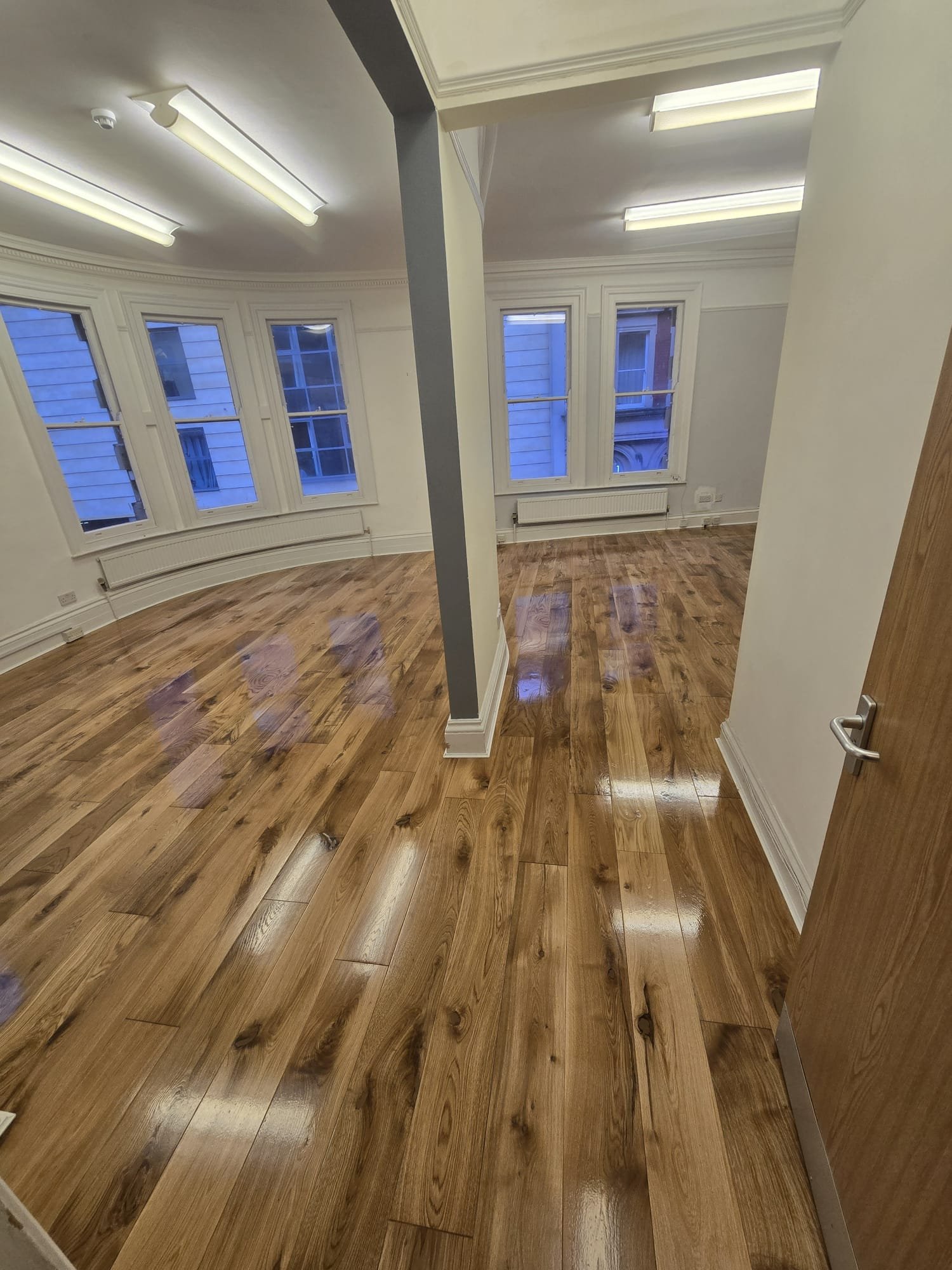
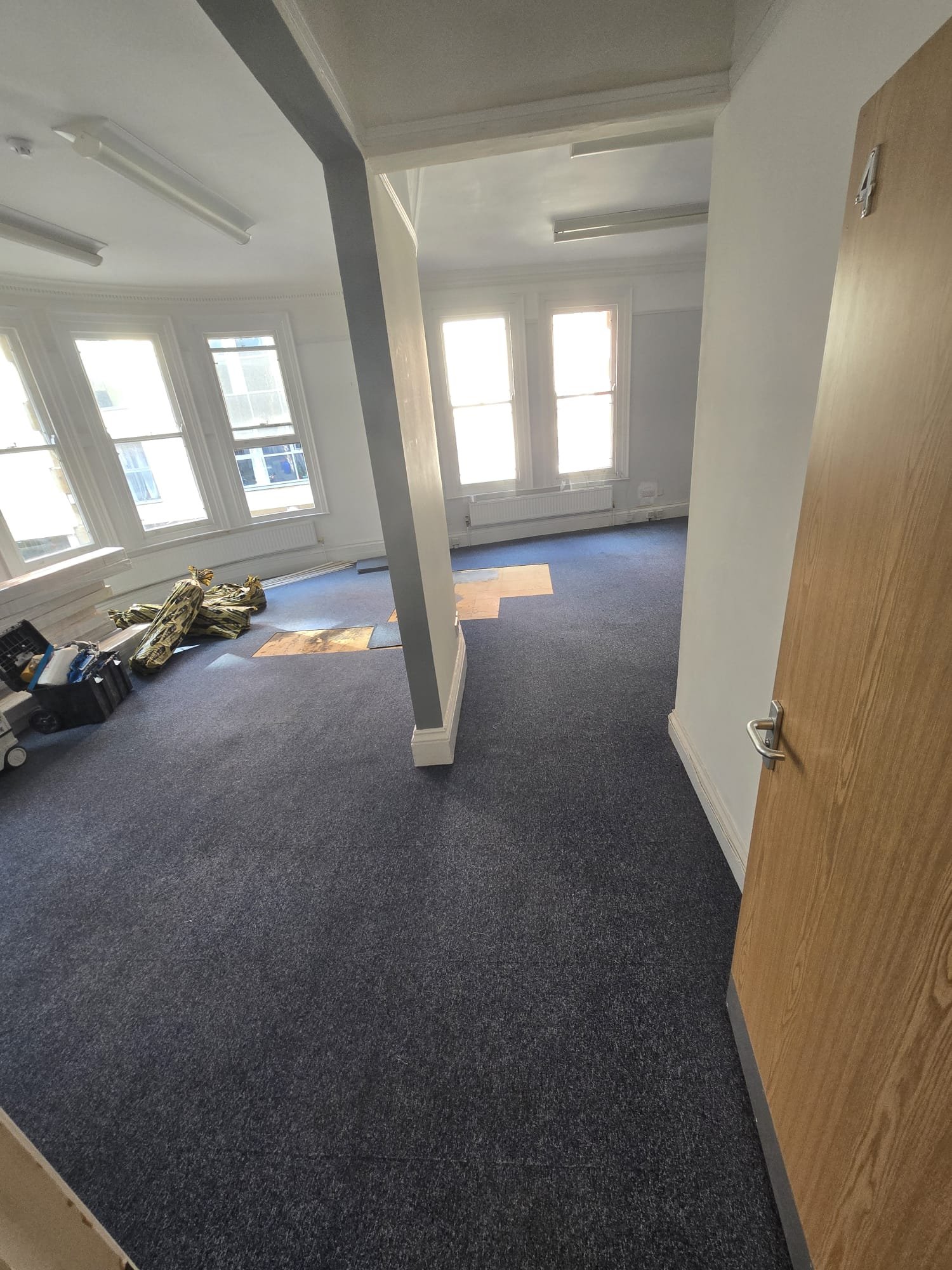
Drag the handle to compare before and after.
Preparation & planning
Moisture assessment
Detailed subfloor relative humidity (RH) testing prevents cupping or warping before engineered boards are laid.
Timber acclimation
Planks are acclimated to the property climate to ensure structural stability after installation.
Vapour & sound barriers
High-density underlays with integrated damp proof membranes (DPM) block moisture and deaden impact noise.
Installation detail
Flexible fixing methods
Choose floating click-lock systems for speed or full elastic adhesive glue-down for a solid, quiet feel underfoot.
Expansion gap precision
Careful perimeter expansion spacing accommodates seasonal shift without boards pinching or lifting.
Subfloor profiling
Subfloor levelling, ply sheeting, or latex screeding to meet the flat surface specification.
Engineered Floor Installation process
- Step 1
Inspect subfloor level, stability, and conduct relative humidity tests.
- Step 2
Acclimate engineered timber planks and prepare vapour underlayment layers.
- Step 3
Precise board laying, custom offset pattern matching, and joint locking.
- Step 4
Skirting/trim refitting, threshold transition installations, and handover.
Ready to transform your floors?
Get in touch with our team today for expert advice, a professional on-site assessment, or a free, no-obligation quote tailored to your property.
Request a flooring quoteFrequently asked questions
Can engineered boards go over underfloor heating?
Often, yes, as long as the system is commissioned and the board manufacturer guidelines are followed.
Can you supply engineered wood flooring and finishes?
Yes. We can supply engineered boards, including long planks around 1700-1900mm with mixed widths, then finish them with low-VOC lacquer, oil, or stain depending on the style and durability you need.
Do you float or glue engineered boards?
We choose the method based on the board construction, subfloor type, and room acoustics.
How much expansion gap is left?
We follow manufacturer guidance and leave perimeter gaps to allow seasonal movement.