
Engineered wood restoration
Refresh engineered boards with careful sanding and protective finishes tailored to the wear layer.
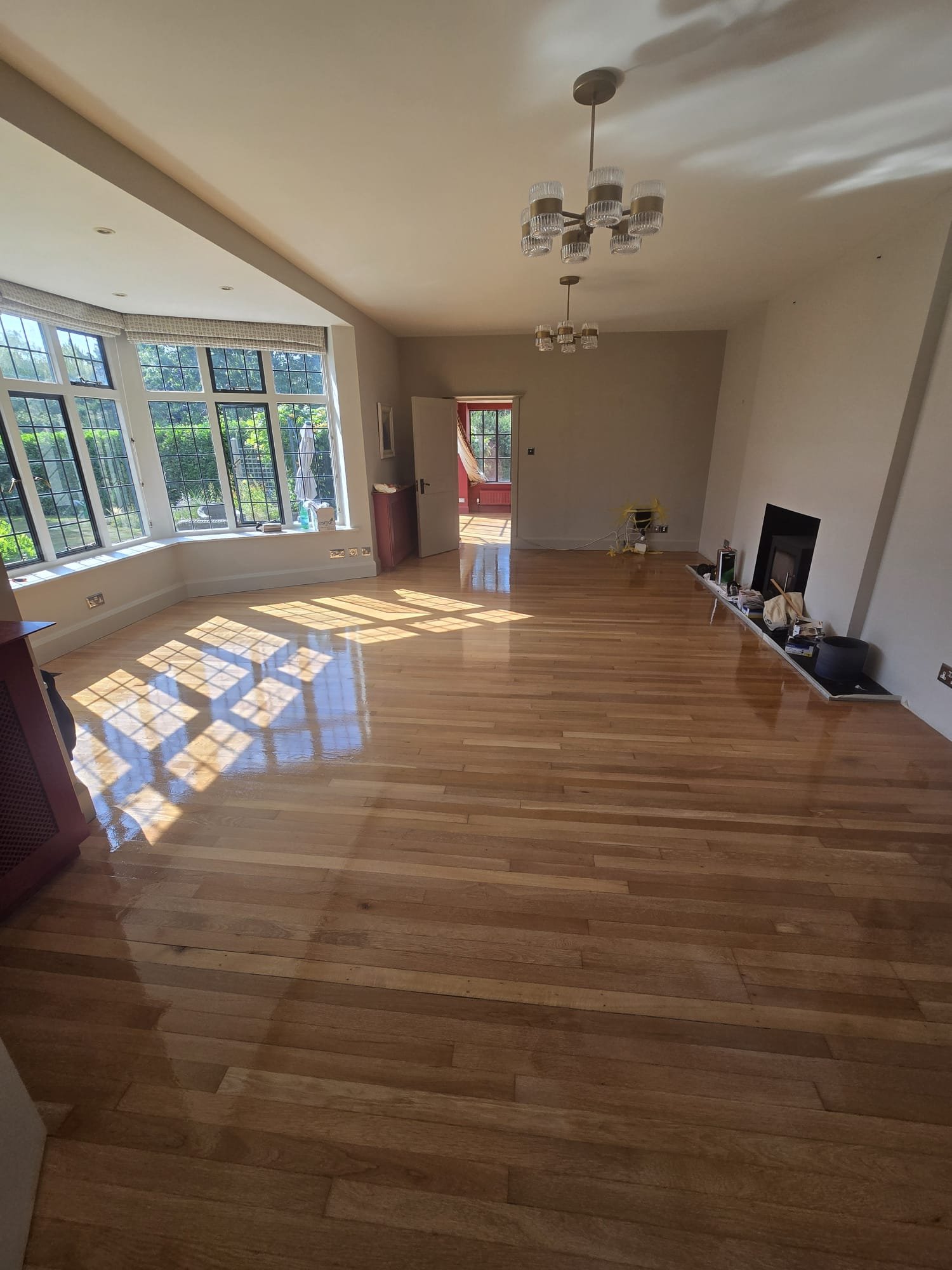
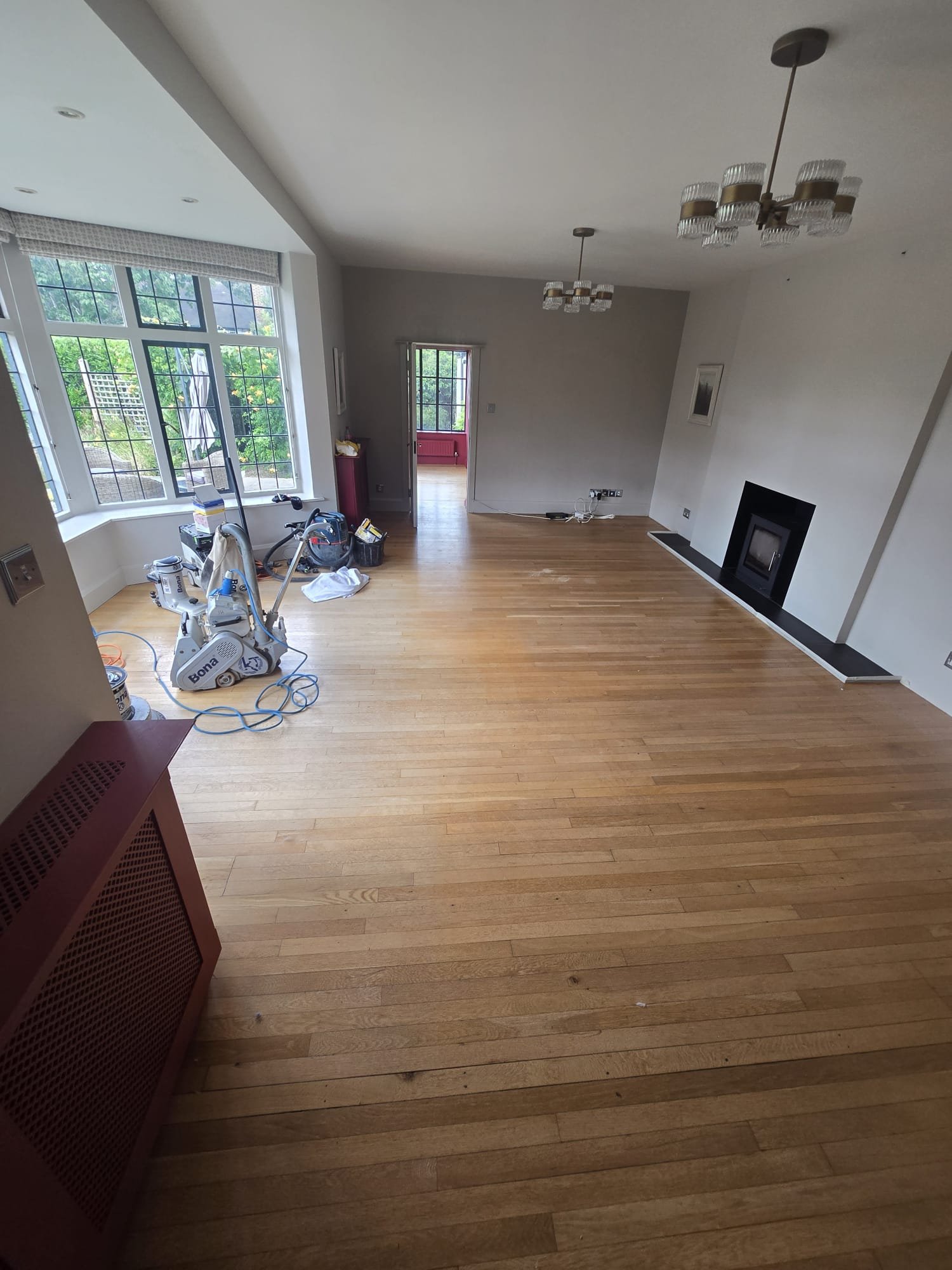
Drag the handle to compare before and after.
Sanding limits & checks
Veneer depth inspection
Checking the thickness of the engineered wood wear layer to confirm sanding suitability without breaching the ply core.
Gentle flat sanding
Using fine-grit progressive belt sands and rotary trio buffing to preserve veneer thickness.
Localised repairs
Fixing surface scratches and shallow dents carefully without aggressive timber removal.
Finishing & protection
Specialist lacquers
Applying finishes designed to flex with engineered boards and resist household liquid spills.
Seam moisture sealing
Ensuring top coat sealants fully protect micro-bevel joints from water penetration.
Inter-coat buffing
Lightly abrading between coating layers to achieve a smooth, premium surface sheen.
Engineered wood restoration process
- Step 1
Inspect structural veneer thickness, joint stability, and clean seams.
- Step 2
Perform light progressive sand with dust-extracted belt and trio rotary sanders.
- Step 3
Apply custom primers and the first protective wood seal coat.
- Step 4
Buff the cured coating, vacuum, apply the final top coat, and deliver care guides.
Ready to transform your floors?
Get in touch with our team today for expert advice, a professional on-site assessment, or a free, no-obligation quote tailored to your property.
Request a flooring quoteFrequently asked questions
Can engineered floors be sanded?
It depends on the wear layer thickness. We assess this before recommending sanding.
How many times can engineered boards be sanded?
Often one to two times, depending on the wear layer and previous refinishing.
How long does engineered wood restoration take?
Most engineered wood restoration projects take 1-2 days, depending on room size, floor condition, and the chosen finish.
Is engineered wood restoration dusty?
Modern sanding machines use advanced dust extraction systems, keeping dust levels very low and suitable for residential properties.
Is it cheaper to restore engineered wood than replace it?
Yes. Restoration is usually far more cost-effective than replacing engineered wood flooring, especially in large areas.
What finishes do you use afterward?
We apply hardwax oils or lacquers based on durability and the desired sheen.