
Engineered wood restoration
Refresh engineered boards with careful sanding and protective finishes tailored to the wear layer.
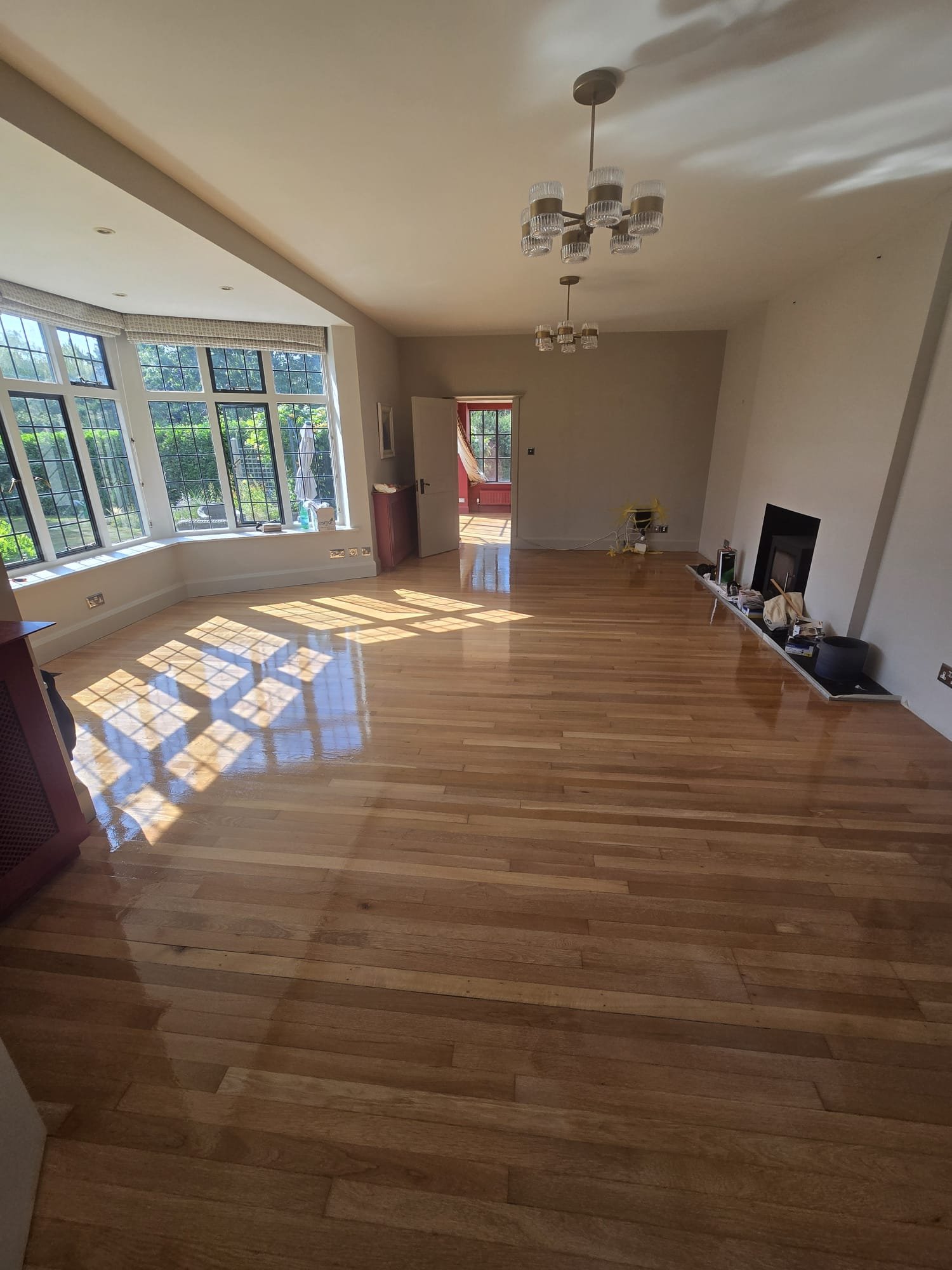
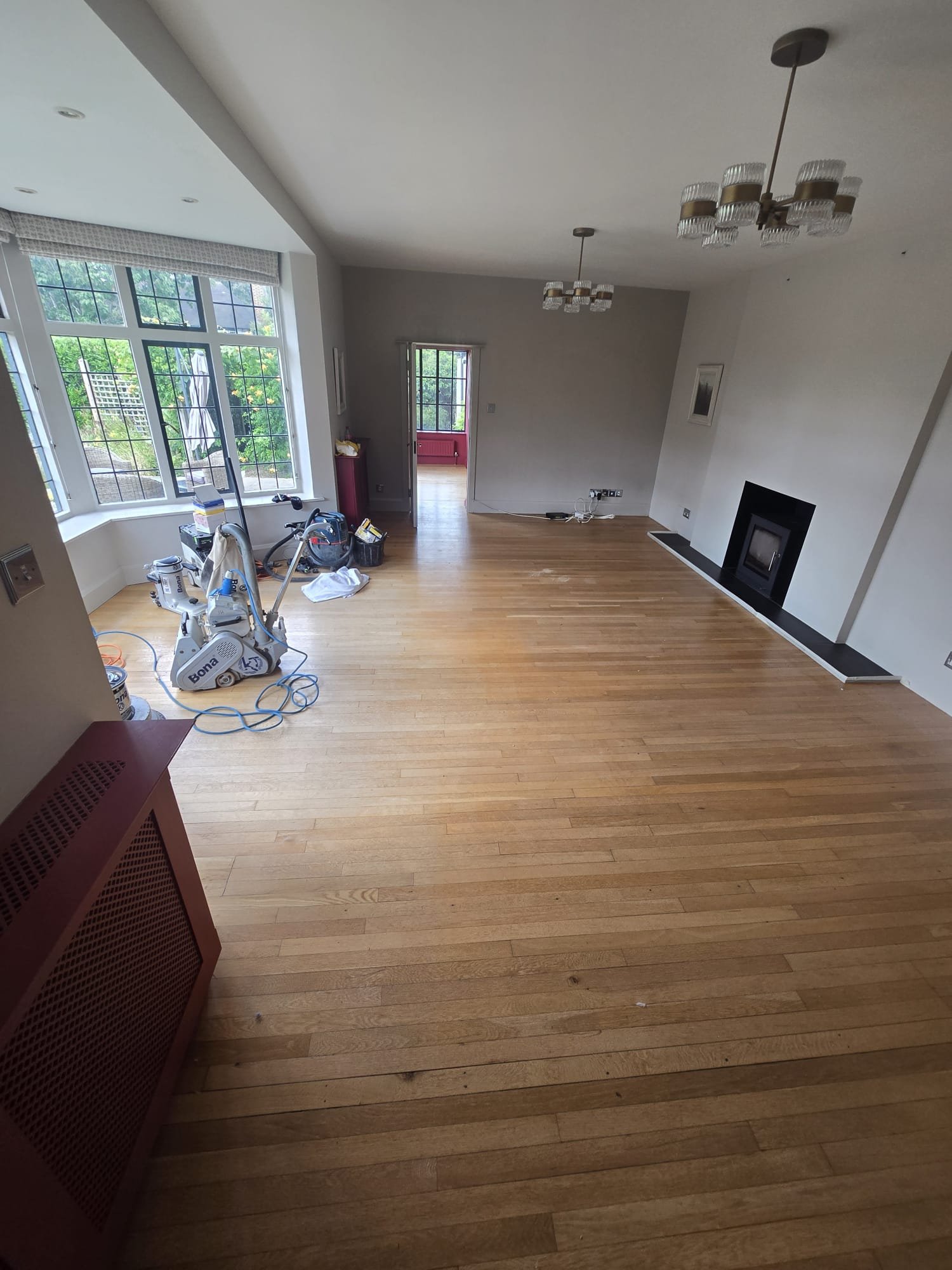
Drag the handle to compare before and after.
Surface preparation
Dust-controlled sanding
Sealed extraction and progressive grit work remove coatings and wear cleanly.
Targeted repairs
Gap fills, board fixes, and resin repairs stabilise the timber before finishing.
Surface checks
Moisture and level checks confirm the right finish system for your floor.
Finishing & protection
Colour testing
Stain samples approved on site for a consistent, personalised finish.
Durable sealing
Hardwax oils or lacquers layered for resilience and easy maintenance.
Aftercare guidance
Clear cleaning and maintenance advice to keep the floor looking its best.
Engineered wood restoration process
- Step 1
Site preparation and protection of adjacent areas.
- Step 2
Progressive sanding sequence with dust extraction.
- Step 3
Repairs, staining, and colour approvals.
- Step 4
Protective sealing with staged curing and final polish.
Frequently asked questions
Can engineered floors be sanded?
It depends on the wear layer thickness. We assess this before recommending sanding.
How many times can engineered boards be sanded?
Often one to two times, depending on the wear layer and previous refinishing.
How long does engineered wood restoration take?
Most engineered wood restoration projects take 1-2 days, depending on room size, floor condition, and the chosen finish.
Is engineered wood restoration dusty?
Modern sanding machines use advanced dust extraction systems, keeping dust levels very low and suitable for residential properties.
Is it cheaper to restore engineered wood than replace it?
Yes. Restoration is usually far more cost-effective than replacing engineered wood flooring, especially in large areas.
What finishes do you use afterward?
We apply hardwax oils or lacquers based on durability and the desired sheen.